 After nearly a decade, Justin Cronin wraps up his trilogy of books that started with The Passage. If you’re unfamiliar with the novels or have just started watching the Fox TV series (which is sitting on my DVR), this trilogy of novels is set in a post-apocalyptic future where humanity has been more or less destroyed by a virus that was used for experiments by scientists and the U.S. government and turned thirteen people into vampire-type creatures. Once they get loose in The Passage, the decimation of the human populace is swift and the story picks up about a century later.
That story wound its way through the second book in the series, The Twelve, and now concludes with this one, where Cronin jumps forward in time again for a tale about what it is going to take to both preserve humanity and destroy the original vampire, Fanning (who is essentially The Devil). The latter comes through a confrontation in what’s left of New York City (no spoilers there–the NYC skyline was the image used for the hardcover edition) and Cronin spends much of the first half of the book setting that up in one way or another, first by having us meet Fanning and get his back story and then layering on the mission that select characters have to undertake–most notably, Amy, who is the “star” of or at least the origin point of the trilogy.
Saving humanity winds up being the task of the supporting cast, as they find the cities they have begun to rebuild are not as safe as they thought and one character develops an idea for an ark by fixing up an abandoned freight tanker he found while sailing around the ocean in search of signs of life outside of the United States and North America.
I haven’t gone too much into the details of the characters’ names and some of the settings and circumstances because this is the third part of a trilogy and while Cronin gives you enough context to figure out what went on in the prior two books, going into too much detail would spoil those two books for people who haven’t read. And by the way, that’s one of his strengths as a writer–even if you haven’t read the books in a while, you find yourself getting reacquainted with all of the characters from the two previous installments and he reminds you of why you cared about them in the first place.
Cronin spends his time throughout the novel playing with themes of life, death, good, and evil that are classic literary themes and while the idea that humanity has been ravaged by some sort of mutating virus has been done to the point where it’s hard to break new ground, he manages to make this feel fresh. I think it’s partly becuase the characters are intriguing and you’ve spent so much time with them, and also that he goes for a huge timeframe. Whereas The Strain’s trilogy of novels is immediate in its setting, Cronin gives us a century and then some, taking us way beyond where many of these stories go. As a result, he makes you want to learn about the world of these characters.
As a concluding chapter, The City of Mirrors is deeply satisfying, and that’s a very high compliment because many final chapters in trilogies or long-running sagas often leave fans feeling cheated or wanting more. Cronin knows the job that he had to do and while he takes his time getting it done, he gets it right.
You should read this if …
You like a good creature feature story mixed with comic book-level world building
Post-apocalyptic stories are your thing
You’ve read the first two books of The Passage trilogy
 It’s the thirty-first episode of Required Reading With Tom and Stella! This podcast, which is hosted by Tom Panarese (Pop Culture Affidavit, In Country) and Stella (Batgirl to Oracle: A Barbara Gordon Podcast, The Batman Universe) is two teachers talking about literature. Each episode, we will be taking a look at a single work, analyzing it, criticizing it and deciding if its worth its place in the canon.
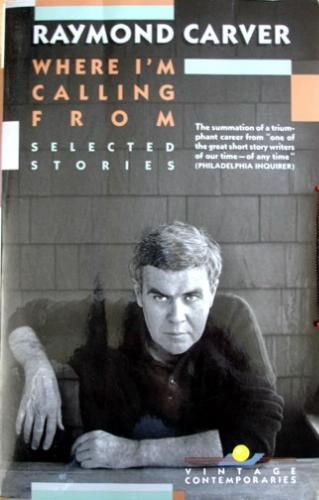 While I do enjoy reading short stories, I’m not the biggest fan of making my way through short story collections, especially those by the same author. I can imagine that it’s because I’m so used to reading novels that when I go from story to story, I expect the continuity that comes with going from chapter to chapter of a novel. So I guess that’s why it took me the better part of three years to read this collection of stories by Raymond Carver.
 It’s the thirtieth episode of Required Reading With Tom and Stella! This podcast, which is hosted by Tom Panarese (Pop Culture Affidavit, In Country) and Stella (Batgirl to Oracle: A Barbara Gordon Podcast, The Batman Universe) is two teachers talking about literature. Each episode, we will be taking a look at a single work, analyzing it, criticizing it and deciding if its worth its place in the canon.
 It’s the twenty-ninth episode of Required Reading With Tom and Stella! This podcast, which is hosted by Tom Panarese (Pop Culture Affidavit, In Country) and Stella (Batgirl to Oracle: A Barbara Gordon Podcast, The Batman Universe) is two teachers talking about literature. Each episode, we will be taking a look at a single work, analyzing it, criticizing it and deciding if its worth its place in the canon.
 It’s the twenty-seventh episode of Required Reading With Tom and Stella! This podcast, which is hosted by Tom Panarese (Pop Culture Affidavit, In Country) and Stella (Batgirl to Oracle: A Barbara Gordon Podcast, The Batman Universe) is two teachers talking about literature. Each episode, we will be taking a look at a single work, analyzing it, criticizing it and deciding if its worth its place in the canon.
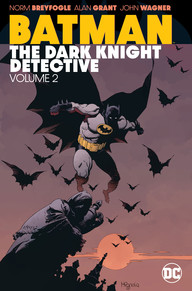 As DC reprints Batman’s adventures from the late Eighties and early Nineties, we come upon a period where Alan Grant and Norm Breyfogle begin to solidify as a creative team. Granted, John Wagner was still co-writing the series with Grant, but as we go through this collection, which features Detective Comics #583-591 and Annual #1, we see a lot of the elements that would make their work on the Caped Crusader so memorable. We have classic Grant/Breyfogle villains Ratcatcher and The Ventriloquist and Scarface make their first appearances as well as an outstanding three-part storyline featuring a villain named Kadaver and the creation of The Corrosive Man (whose touch melts things away). There’s also the first annual, which guest stars The Question and is the first part of a three-parter that crosses over into Green Arrow and The Question annuals that year. Unfortunately, those two books’ annuals aren’t included, which is one of my only gripes about this collection.
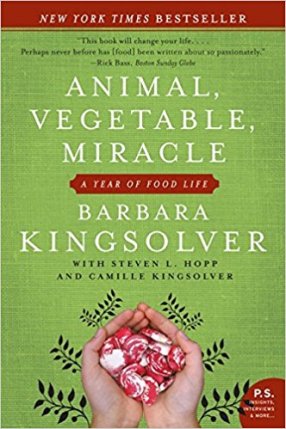 My new year’s resolution being one of using and consuming what I have accumulated with an eye toward my mental health, I’ve also been thinking about what and how I eat and how that has an impact on my physical health. I’m 41 years old as I write this and it seems like my body has decided that it was finally time for all of the mysterious ailments and issues to come about.
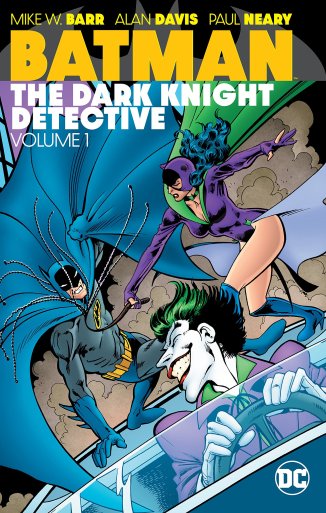 As our mutual friend, The Irredeemable Shag, says, “Everyone has a Batman phase.” I think that Stella is still in hers. Mine started in 1990 and while I finally gave up Batman in the early 2000s, I’d say that its high point ended sometime around the middle of the decade. The comics collected in this volume are from a few years before my phase; specifically, they are the first several issues of Detective Comics in the post-Crisis DCU.
